One thing that I think becoming a ham radio operator has encouraged me in is a desire to mend things instead of replacing them. As I mentioned in my previous post, I had to construct my own power cord for my radio. When you have to make something as seemingly basic as a power cord, then mending a rip in something seems even more basic and obvious.
Recently, I washed the mattress cover from my bed, and noticed it ripped along a quilted line of stitching. It was a very cheap cover that I got from Ikea, and checking their site shows it’s still very inexpensive – $17.99. But it would have taken me time and effort to go get a new one, and I have plenty of thread! I grabbed a spool at the top of the box – a green one.
Visible mending appeals to me. Instead of hiding that wear happened, why not embrace it? Show that this item of mine is actually being used, fulfilling its purpose.

I sat on top of my bed, listened to a podcast, and stitched it back together. It has been a month, and my stitches still hold. It makes me feel good to sleep on something my hands did to keep from throwing away a large amount of material that many other hands elsewhere spent part of their life designing, assembling, packaging, and shipping.
Today, I went to put away a blanket that has been sitting draped over a chair for ages. It’s a puffy blanket that I mainly use for camping, and it came with a stuff sack it can be pushed into. When I picked up the sack, I noticed that the opening flopped oddly. It had a piece of plastic sewn into the edge, and normally you fold it over and then buckle it. But the piece of plastic had snapped. If I used it as is, I was worried it would jab through the fabric and tear.

I had been watching some videos by Laura Kampf, so was already in a re-use/repair mindset this afternoon, I guess. I thought about completely removing the fold-over closure and making it into a drawstring closure, but decided to use my stitch ripper and see if I could just remove the plastic first.
That was successful, and so I began to re-sew the seam closed – this time with a bright red thread against the black fabric and blue accents.
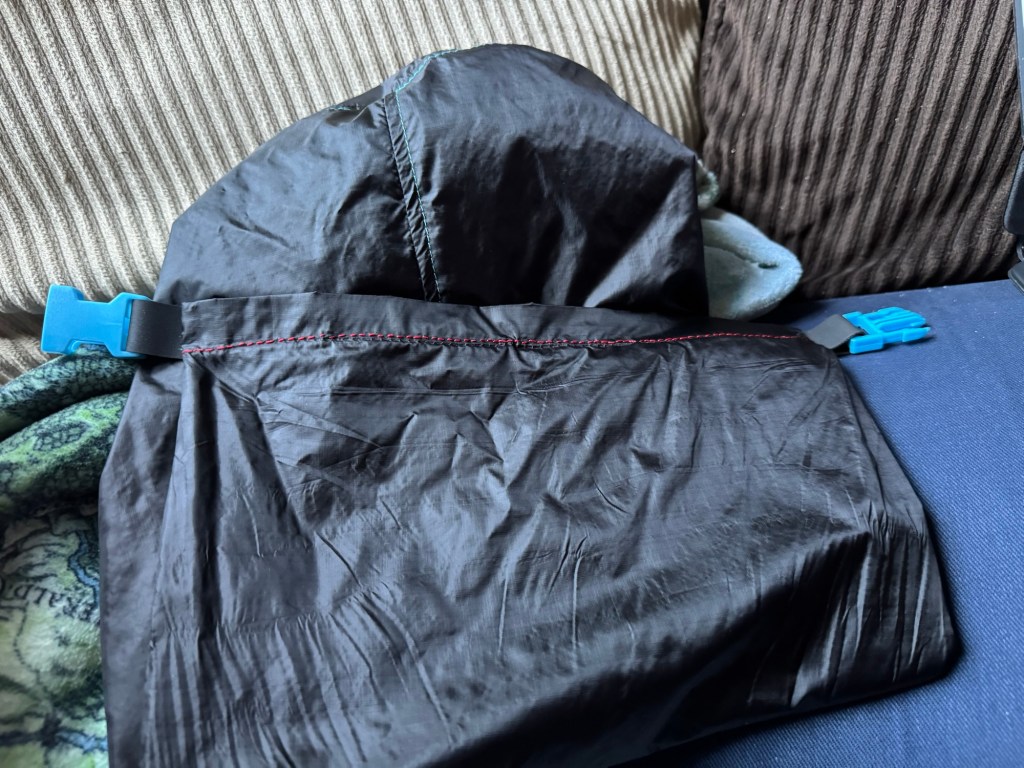
It surprises me how quickly I can knock out a simple line of stitches. I always think hand-sewing must take forever, right? Otherwise, why would we have invented sewing machines? I wouldn’t necessarily want to make a whole garment using hand sewing, but a single line of stitches can be meditative. I sewed and let the videos be my company.
I like this line of red stitches. It proclaims that I am here, it puts my mark on this item, it declares that it is mine.

It’s not truly visible mending once it’s folded down and closed, but I know it’s there, just like I know the green stitches are there under my sheets.
I have a pair of maroon pants that have a hole in them, and I am trying to decide just how I want to do visible mending on them, to show the world that I value my things, and want to keep them and make them even more mine. I am looking forward to it.
 Skulleigh.com