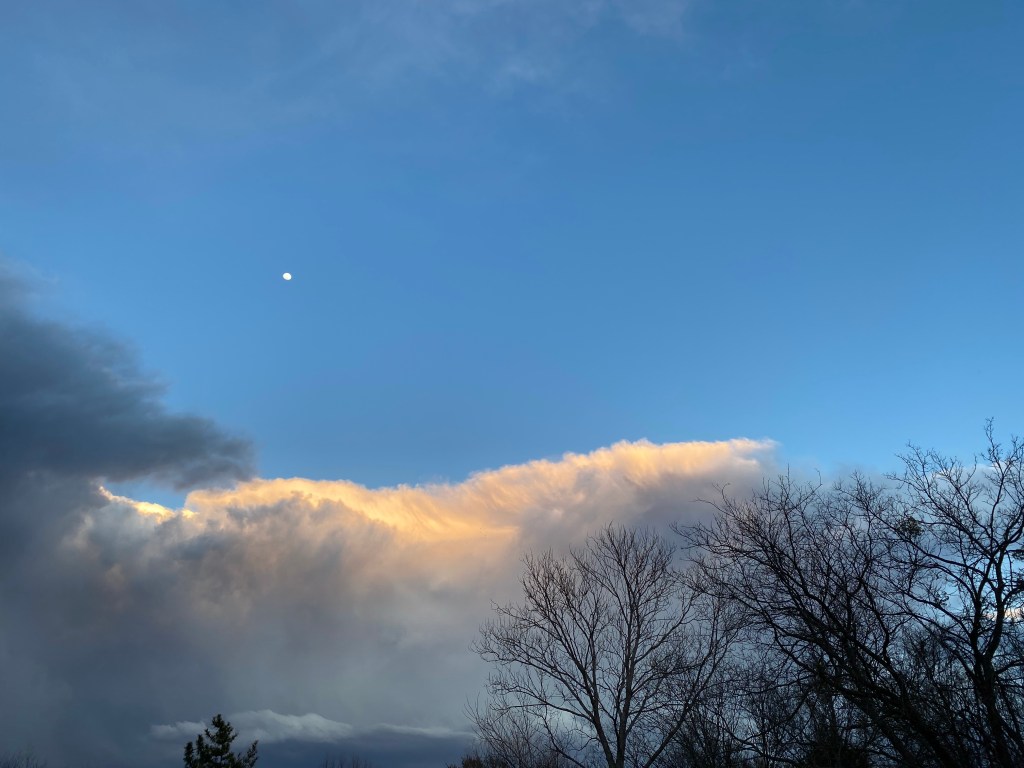

I live in Texas, where the sky regularly tries to kill us. If it’s not thunderstorms, it’s hail, and if it’s not that, it’s tornados. Folks to the south have hurricanes, and to the west and southwest have wildfires to contend with as well. Disasters can cause homes to be uninhabitable until repairs can be made.
A few months into the pandemic, in 2020, I had to evacuate my house and neighborhood for about half a day because a natural gas line caught on fire and there was a danger of explosion. In 2021 Texas experienced a winter storm that caused power outages – some for multiple days – across the state during very cold weather, and I again had to leave and go to stay with friends so I didn’t freeze. I’ve also had extended power outages during the height of summer, in over-100 degrees Fahrenheit weather.
Thankfully I already had a prepared go-bag and a charged-up power station, so I was able to quickly grab what I needed and get out of the house.
What is a go-bag, you might ask? It’s basically a kit that you can grab and leave your house quickly in an emergency, and it contains basic supplies that you will need in a disaster if you are required to leave your home.
You can find a checklist at Ready.gov that outlines everything they recommend, but I find that some people feel that list is intimidating, or it sounds expensive – and it can be if you are building it all from scratch and buying things specifically for it, and if you are creating a kit for multiple people such as your family for several days as they recommend.
What I suggest is starting with enough for a one-day evacuation with things you may already have. The majority of the times I’ve had to bug out of my house I’ve only had to be gone for a half or single day. Once you have your go-bag set up, you can gradually add to it as time goes by to make it useful for a longer period of time.
Grab a bag of some sort. This doesn’t have to be fancy, you probably have a freebie canvas or cloth bag that you got from somewhere or one with art you once loved printed on it, but that you aren’t actively using stuffed in a closet somewhere. I just walked into my clothes closet and found three without even trying! Don’t worry if it doesn’t zip or snap at the top, but if it does, that’s a bonus!
Now you’re going to start adding things to your bag. I tend to think about the things that go in as modules or groupings of items, and if you can put those things in smaller bags inside the bigger bag, you’ll make your life easier, especially if your outer bag doesn’t have a way to close it. You can use zip pouches, ziplock bags, or even tie things up in a spare bandana or scarf (which itself can be handy in an emergency, as a sling, a filter, a hot or cold compress, or a head covering).
Here are the modules/categories I tend to group things into:
- Clothing
- Personal care
- First aid
- Power & Tech
- Documents
- Food & water
- Entertainment
You may be able to combine some of these groupings – such as personal care and first aid, or tucking documents into your power & tech module. Use your best judgment.
Clothing: Is there an outfit that you don’t wear much but still fits? Stick it in there. At the very least, put in a change of underwear & socks. After a stressful day, it can really make you feel better to have warm feet. I really do recommend putting the underwear and socks in a zip bag to keep them clean and dry. No one wants to put on damp undies.
Personal Care: Grab a roll of TP – it doesn’t even have to be a full roll, to save space you can grab a roll that’s halfway used from your bathroom. To further save space, squash the roll flat. I highly recommend popping it in its own ziplock bag to keep it dry. If you need/use them, put in tampons or pads, enough for a day, at the least. If you have spare travel-sized toiletries, like hotels provide, you can add those, or pick some up from a store. Add in a toothbrush and toothpaste. If you can, a packet of baby wipes will provide you a way to get at least slightly clean if you don’t have access to a shower or bath.
First Aid: bandaids, burn ointment, antibacterial ointment, a small container of your preferred painkiller (it’s a good idea to note the expiration date), and any daily medications you require. You can purchase small first aid kits that you can add your own medications to, but don’t forget to rotate the ointments/creams out when they expire!
Power & Tech: If you have a spare charging cable & power brick for your phone or other electronic devices it’s a good idea to have it in your go-bag, so you don’t have to remember where your usual one is while stressed or have to crawl under or behind furniture to unplug it when you’re trying to get going quickly. A power bank for recharging your phone or other devices is also a good thing to have in case you can’t find a place to plug in. This module is also a good place for a USB thumb drive with any important data you may need as a backup – that can be a list of addresses and phone numbers of family and friends, a password protected list of your own account numbers and passwords, or whatever data is valuable to you. This is also a good place to add in a small flashlight or headlamp, and batteries for it.
Documents: I highly recommend this bag also being a waterproof one, and you can add in things like your passport, copies of medical or eyeglass prescriptions, copies of your insurance policies, or other important papers you might need if you end up having to be away from home for an extended period. I also tend to tuck in a little cash or gift cards for chain stores that tend to be widespread, like Target or Wal-mart so you can pick up items that you might have forgotten.
Food & Water: It is recommended that you have enough water for each person in your group to have 1 gallon per day. That can be very bulky and heavy, especially if you do not have your own method of transportation. I recommend that you at least have a sturdy 1-liter water container already filled and possibly later add a filter such as a Sawyer or LifeStraw. You probably have a water bottle that you have been given that you can use. For food, some sort of snack that you commonly already eat & keep in your pantry is a good idea so that you can keep it rotated out and not worry about it being expired. Things like granola bars, packets of tuna salad and crackers, peanut butter, and such things are good. Some people recommend MREs (Meals Ready to Eat – military meals intended for soldiers on the march) and dehydrated hiker meals, but they are generally high in salt and if you’re not used to them, can be unappealing and difficult to prepare in a stressful situation. If you are willing to add in some method of heating water, such as a backpacker’s stove, you can add in things like instant oatmeal, ramen, and hot drinks like tea, instant coffee, or instant cocoa. A hot meal or drink can make you feel human again!
Entertainment: Most emergencies that result in your needing to leave your home involve a whole lot of waiting around to be able to return. It’s good to have something to do during that time. This is a small module that can make a big difference. It can be as simple as a deck of cards to play solitaire on your own or go fish or even poker with your family or friends. It could be a small sketchpad and pencils for drawing or playing tic-tac-toe or hangman. You might tuck in a paperback copy of your favorite book. Give yourself something to do besides worry and pace!
Now you have the basics of a go-bag put together, and you can expand it to multiple days as you wish, and start customizing it for what you actually need. Create your own checklist based on the above info, and based on the recommendations at Ready.gov, and keep it with your go-bag so you can replace things as needed. Congratulations – now you’re prepared!
 Skulleigh.com
Comments
One response to “You should have a go-bag”
[…] you have a Go Bag, make sure it’s handy as well. See this post for how to start […]
LikeLike